Since the Berlin Conference (1884-5) Africa has been plagued by the creation of artificial states. It was then that European colonies partitioned Africa amongst themselves in a well thought out and fair manner – using a ruler and pen. The unfortunate reality is that these borders were drawn based on how far countries had advanced on the map and the location of known natural resources, with little consideration for the people living within these lines and how they themselves wished to be identified. The ethnic conflicts within Sudan, Somalia, Kenya, the DRC and elsewhere provide a constant reminder that European interests are not compatible with African demographics.
The Democratic Republic of Congo is the most poignant example of this, where over 6 million people have died from civil wars since the late 1990’s, easily making it the most unreported war zone in the world. When the details are examined, its not hard to see why this country is a weak and fractured state. Over 200 ethnic groups and many languages exist within these borders, with little infrastructure from DRC’s years as a Belgian colony remaining (Marshall, 2016).
The consequences of Africa’s artificial borders can be found in every corner of the continent and are not limited to warfare. These borders have a long list of implications e.g. travel, trade, land ownership and false democracies and this leads many to ask the question ‘Are Africa’s borders due to be redrawn?’ (Ramutsindela, 2014). While a logical step, this is very unlikely and the best opportunity to do, decolonisation after WW2, having past. Africa is rampant with power-hungry politics where those tribes in power are reluctant to relinquish the control they possess (Quora, 2018).
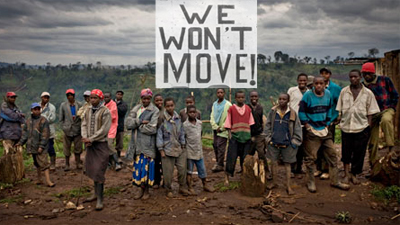
As a result people have explored other ways to resolve some of the side effects experienced and many arrows seem to point towards blockchain technology. As mentioned, as a result of ethnic conflicts on the continent, there is often disputes over land. Companies are offering blockchain solutions to store land records that can not be tampered with (BBC News, 2018). This project is already underway in Rwanda where they are digitising the Rwanda Land Registry (Tobor, 2017). This could put an end to the ambiguity that surrounds land ownership and prevent the ‘up for grabs’ attitude adopted by non-African countries trying to gain power on the continent.
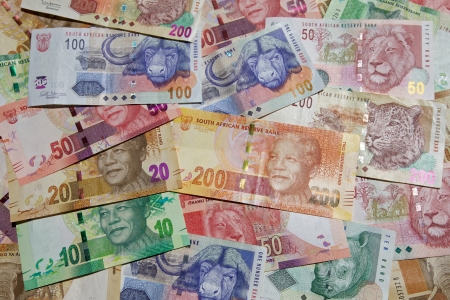
Another side effect caused by Africa’s borders is the myriad of currencies. To make things more complicated, very few countries in the continent share a currency and this creates many issues with trade. For example, someone in Nigeria can’t buy directly off a Kenyan merchant, limiting a merchants’s potential scale. Conversations about a single currency are beginning to emerge, with blockchain being a popular solution. South Africa’s president President Ramaphosa has acknowledged that it is the next natural step for Africa to have a single currency (Allison, 2018). However, its no question that the implementation of such a vision would be without its problems.
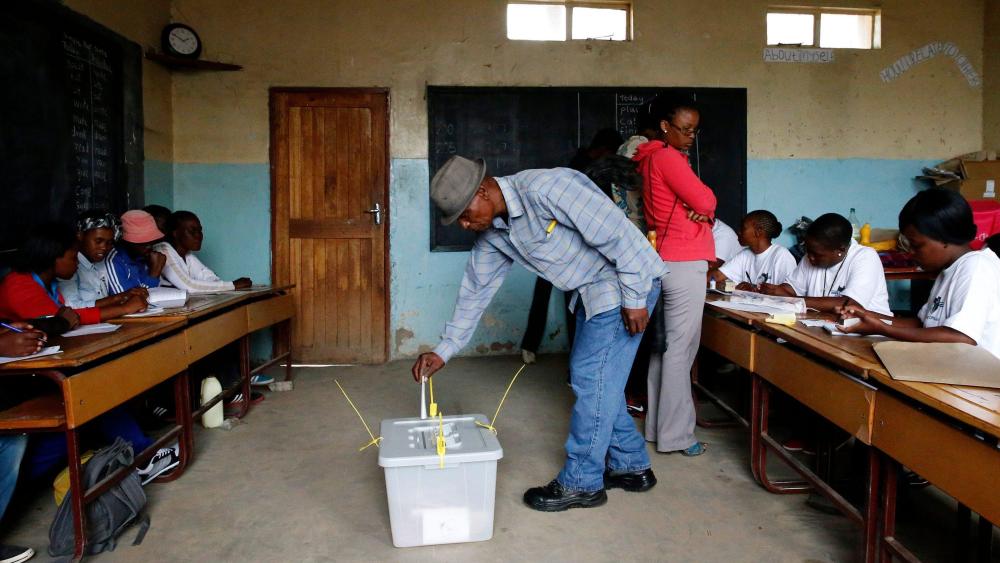
As many tribes and ethnicities exist within a country’s borders, its often that one tribe/family will gain total control, leaving a large proportion of the population voiceless. In order to stay to prevent a change in power many leaders resort to conflict or rigging elections to maintain their leadership (Pollock,2018). This level of corruption has been a major problem across the continent, contributing to conflict and restricting freedom. Again, blockchain technology offers a promising solution. Many are proposing using blockchain at the core of a digital voting system where an immutable voting records could ensure Africa’s ability to hold democratic elections.
While a blockchain technology provides solutions to some of Africa’s worst problems, we must not overlook the challenges of its implementation. Such a project could be halted by regulation, lack of blockchain developers or something as simple as internet access, which we all take for granted here in Europe.
Despite its difficulties the future looks bright for Africa. With a lot of recent foreign investment, people’s willingness for a change and new technologies such as blockchain there is the potential for radical change.
“People are now thinking beyond the borders of their own nation.” – President Ramaphosa
References:
Allison, S., 2018. Ramaphosa floats the idea of an ‘African bitcoin’. [Online]
Available at: https://mg.co.za/article/2018-03-21-ramaphosa-floats-the-idea-of-an-african-bitcoin
[Accessed 15 February 2019].
BBC News, 2018. Five African tech trends to look out for in 2018. [Online]
Available at: https://www.bbc.com/news/world-africa-41899173
[Accessed 13 February 2019].
Marshall, T., 2016. Africa. In: Prisoners Of Geography. London: Elliott and Thompson, pp. 115-141.
Mwanza, K. & Wilkins, H., 2018. African startups bet on blockchain to tackle land fraud. [Online]
Available at: https://www.reuters.com/article/us-africa-landrights-blockchain/african-startups-bet-on-blockchain-to-tackle-land-fraud-idUSKCN1G00YK
[Accessed 13 February 2019].
Pollock, D., 2018. Africa’s Blockchain Potential Untapped, But How Can It Be Implemented?. [Online]
Available at: https://www.forbes.com/sites/darrynpollock/2018/10/23/africas-blockchain-potential-untapped-but-how-to-implement-it/#29b948354911
[Accessed 15 February 2019].
Quora, 2018. With so many artificial borders, do you think Africans will soon draw new borders?. [Online]
Available at: https://www.quora.com/With-so-many-artificial-borders-do-you-think-Africans-will-soon-draw-new-borders
[Accessed 14 Februrary 2019].
Ramutsindela, M., 2014. A Post-Colonial Africa, Drawn by Nature and Culture. [Online]
Available at: https://www.nytimes.com/roomfordebate/2014/07/03/where-do-borders-need-to-be-redrawn/a-post-colonial-africa-drawn-by-nature-and-culture
[Accessed 13 February 2019].
Tobor, N., 2017. Rwanda Government’s Blockchain Project Gains Momentum. [Online]
Available at: https://www.iafrikan.com/2017/10/13/rwanda-government-blockchain-project/
[Accessed 15 February 2019].

 Beyond The Border